Guest Speakers Meena and Dipankar from Pangea World Theater
Summary & Reflections: Meena and Dipankar spent about an hour and a half with us, sharing their work with Pangea, their reasons for breaking off on their own, and their commitment to human rights and erasing/eliminating the margin that always wants to define minority people as "marginalized" this or that. It was definitely interesting to hear how they have worked to redefine some of the ways in which they operate their theater business in order to better support their objectives. Mainly, by keeping a diverse staff, advisory board, and actor base, they find that they are drawing a more diverse audience than other theaters in the area, which are still surviving mainly on patronage by the white mainstream. Another interesting point about changing procedures to shift paradigms was the was they now handle auditions for productions. Dipankar spoke about an audition with an elder Native American man who arrived with no prepared monologue and no headshot. Putting his own theories into practice, Dipankar invited him to tell a story as his monologue. The man did it, and blew the reviewers away with his talent! The point is, however, that man's talent would have gone unnoticed in a mainstream audition process.
Questions: One of the main questions that arises from discussions like this one lead by Meena and Dipankar, is what is the purpose of theater in people's lives? Such a question is important not only in terms of measuring a theater's success (currently measured by ticket sales), but also in terms of how viable is a social justice type theater like Pangea in attracting mainstream audience members and donations? Are we looking to be challenged when we go to the theater? Or are we looking to be entertained? Why is High School Musical sold out at $75 a ticket, but Pangea can't fill 80 seats at $12 per ticket? We started scratching at the surface of these questions in class, but did not come to any sort of conclusion therein.
(W)rapped Space: The Architecture of Hip Hop (2000) by Craig Wilkins
Summary & Reflections: In this article, Wilkins works very hard to present a concept of space as defined by hip hop's sonic, historic, and cultural qualities, building on theories by Lefebvre and de Certeau. In doing so, he links social activities with spatial practices (p. 8), and posits that hip hop could not have risen out of architectural circumstances other than those that it did, since space and physical environment and are so deeply linked to the practices that they support.
When Dr. Hadjiyanni mentioned that this article's material had been expanded into a book, I thought, "yes—that's a better format for this information". I really felt that the article covered so much ground in so little time, that too many important points were simply glossed over, and other main ideas were not allowed to truly sink in. Furthermore, coming from a perspective that is not particularly well-versed in origins or characteristics of hip hop, I would have appreciated a more developed background on the musical genre. Undoubtedly, Wilkins has enough content on his hands to make a robust book.
Questions: In making this connection between hip hop and architecture, not so very unlike my own efforts to link tango and interactive design, I feel that Wilkins is definitely on to something powerful. It's not so much, I believe, a question of how can architects create a space that engenders more hip hop production, but more like, if hip hop is the cultural expression of a particular group of people under a particular group of circumstances, here now is an architecture that embodies that expression. From that point, in and around this new architecture, evolutionary patterns in hip hop can emerge, as well as perhaps entirely new genres. It is, in that regard, not a means of looking back to emulate hip hop's origins, but rather, seeking continual innovation that reflects the culture and values of the inhabitants, supporting their ongoing evolution.
Friday, April 25, 2008

Wednesday, April 23, 2008
Week No. 13 of 16
Wierzbicka, A. Understanding Cultures Through Their Key Words: English, Russian, Polish, German, and Japanese (1997)
Summary and Reflection: Our class discussion got off to an interesting start in noting that in the very first paragraph of the article, as Wierzbicka makes her argument for the importance of interdisplinary cultural analysis, design—as a knowledge field—is left off of her list (p. 1). I understand that the design domain is still growing and forming as an academic field (vs. its former characterization as a trade), so in the meantime, as we build that body of work and codify the domain, design research draws heavily on the fields of anthropology, sociology, cognitive psychology, etc., just to name a few.
Perhaps we could model an article after Wierzbicka's and call it "Understanding cultures through their design", since this paper, she is campaigning for recognition of linguistics as a crucial element of cultural analysis and building cultural awareness. She positions her thesis against critics who say theories such as hers give too much credit to words—"Let's not exxagerate the importance of language" (p. 9). Wierzbicka counter-argument is long and convincing (ex, all cultures do not feel "sadness", as it is expressed in English), and she relies on three points of investigation and analysis: cultural elaboration and the lexicon (p. 11), Word frequencies (p. 11-15), and key words (p. 15-17). To summarize, the words the cultures use, as well as how often they use them, reflect many aspects of their culture, including social structure, relationships, spiritual beliefs, food customs, environment, moral values, etc. For example, how many times to Russians use the word "Motherland" vs. American English speakers? It is revealing something, that much is certain.
Questions: Our class really responded to the article and people were excited to engage in discussion about it. It was interesting, and important, according to Wierzbicka, to take a class survey on how many of us were bi- or multi-lingual. Notably, I'd say over half the hands went up, but timidly--halfway-ish. It was like people either really didn't have the language skills, or thought they didn't have enough to consider themselves fluent. That's another point entirely, however, since fluency is rarely truly achieved by native speakers of a language...instead, it's a continuum of language competency.
That aside, people seemed to agree that including key words and language in a cultural analysis could be very enriching. I of course think to myself based on my knowledge of Spanish, what are the key words that seem to emerge? For one thing, when I was first learning the language, I was doing so through a lot of pop music. I would buy CDs, listen and sing along to the songs while reading the lyrics in the CD pocket. In this scenario, key words seemed very obvious—amor (love), corazón (heart), te quiero (I love you), olvidar (forget), siempre (always), etc. Obviously, a theme emerges here! Still, Wierzbicka mentions popular songs (p. 17) as a source for identifying key words in a culture. Certainly that was true for Latino pop culture! And upon further thinking, and now that I'm "fluent", those same words are still "key words" I believe...and really support many of the values and social customs of Latino people. I try to avoid stereotypes, but who can argue with the passionate figure of the Latin lover, the "fire in the blood" romance that is associated with Spanish television, movies, and literature. In this case, I think Wierzbicka has a point.
Summary and Reflection: Our class discussion got off to an interesting start in noting that in the very first paragraph of the article, as Wierzbicka makes her argument for the importance of interdisplinary cultural analysis, design—as a knowledge field—is left off of her list (p. 1). I understand that the design domain is still growing and forming as an academic field (vs. its former characterization as a trade), so in the meantime, as we build that body of work and codify the domain, design research draws heavily on the fields of anthropology, sociology, cognitive psychology, etc., just to name a few.
Perhaps we could model an article after Wierzbicka's and call it "Understanding cultures through their design", since this paper, she is campaigning for recognition of linguistics as a crucial element of cultural analysis and building cultural awareness. She positions her thesis against critics who say theories such as hers give too much credit to words—"Let's not exxagerate the importance of language" (p. 9). Wierzbicka counter-argument is long and convincing (ex, all cultures do not feel "sadness", as it is expressed in English), and she relies on three points of investigation and analysis: cultural elaboration and the lexicon (p. 11), Word frequencies (p. 11-15), and key words (p. 15-17). To summarize, the words the cultures use, as well as how often they use them, reflect many aspects of their culture, including social structure, relationships, spiritual beliefs, food customs, environment, moral values, etc. For example, how many times to Russians use the word "Motherland" vs. American English speakers? It is revealing something, that much is certain.
Questions: Our class really responded to the article and people were excited to engage in discussion about it. It was interesting, and important, according to Wierzbicka, to take a class survey on how many of us were bi- or multi-lingual. Notably, I'd say over half the hands went up, but timidly--halfway-ish. It was like people either really didn't have the language skills, or thought they didn't have enough to consider themselves fluent. That's another point entirely, however, since fluency is rarely truly achieved by native speakers of a language...instead, it's a continuum of language competency.
That aside, people seemed to agree that including key words and language in a cultural analysis could be very enriching. I of course think to myself based on my knowledge of Spanish, what are the key words that seem to emerge? For one thing, when I was first learning the language, I was doing so through a lot of pop music. I would buy CDs, listen and sing along to the songs while reading the lyrics in the CD pocket. In this scenario, key words seemed very obvious—amor (love), corazón (heart), te quiero (I love you), olvidar (forget), siempre (always), etc. Obviously, a theme emerges here! Still, Wierzbicka mentions popular songs (p. 17) as a source for identifying key words in a culture. Certainly that was true for Latino pop culture! And upon further thinking, and now that I'm "fluent", those same words are still "key words" I believe...and really support many of the values and social customs of Latino people. I try to avoid stereotypes, but who can argue with the passionate figure of the Latin lover, the "fire in the blood" romance that is associated with Spanish television, movies, and literature. In this case, I think Wierzbicka has a point.
Friday, April 11, 2008
Week No. 12 of 16
Artifacts, Identity, and Transition: Favorite Possessions of Indians and Indian Immigrants to the United States by Mehta and Belk (1991)
Summary and Reflection: Some of the best points raised by Mehta and Belk in this article include their differentiation of the role of objects within people's lives when lives are disrupted by migration---and how the role changes further based on the nature of the migration (voluntary vs. involuntary, or based on factors such as age, socio-economic status, etc.).
In setting Indians apart from other U.S. immigrant groups, a distinction the authors defend aptly based on observations of Indian "difference", they are able to zoom in on their story, and see what the role and meaning of objects has been in the Indian diaspora, particularly in terms of their favorite objects and possessions.
The article positions objects as powerful carriers of memory, culture, association, and calls them anchors of identity (p. 400) in the fluctuating migration journey. Objects can be meaningful for a variety of reasons, depending on the individual, as symbols of self, symbols of other people important to the person, symbols of achievement or heritage, roots, goals, etc.
Questions: Interestingly, the authors also talk about the sort of disconnect that material culture has with Hindu tradition, which renounces material desires in seeking true enlightenment, as well as an emphasize on collective versus self identity. This drew some immediate parallels in my mind to the Ojibwe culture we studied for the culturally sensitive design research. Despite these "core values and beliefs", materials and objects STILL are revealed to play a deeply important role in the identity transformation and assimilation resistance of both Indian immigrants and Native Americans.
Another point that was raised touched on the experience of the Japanese-American ghettos, and the fact that after just 3 generations, Japanese-Americans appeared to have totally assimilated to mainstream American culture (p. 402-403). The authors wrote that althought the first generation of Japanese immigrants assimilated very little and was confined (socio-economically) to the ghetto, after the 2nd generation went on to attend college, the assimilation process kicked in...this greater mobility did not, then, in the case of the Japanese, slow the assimilation process, as Mehta and Belk argue is true for Indian immigrants. Apparently, the key to their argument is the condition in which the 1st generation of immigrants arrives in the U.S...this sets the stage for future assimilation patterns..
Now I'm not sure I agree with this..and I don't think it's a fully developed side of the story, but I definitely have more questions. Like, if these observations suggest a pattern that can transpose to other groups, what does that mean for Mexican immigrants, who arguably are living in ghettos of their own? Can we expect, in two generations from now, a fully assimilated Mexican American culture? This seems doubtful to me right now, instinctively, but in any event, we shall see.
Summary and Reflection: Some of the best points raised by Mehta and Belk in this article include their differentiation of the role of objects within people's lives when lives are disrupted by migration---and how the role changes further based on the nature of the migration (voluntary vs. involuntary, or based on factors such as age, socio-economic status, etc.).
In setting Indians apart from other U.S. immigrant groups, a distinction the authors defend aptly based on observations of Indian "difference", they are able to zoom in on their story, and see what the role and meaning of objects has been in the Indian diaspora, particularly in terms of their favorite objects and possessions.
The article positions objects as powerful carriers of memory, culture, association, and calls them anchors of identity (p. 400) in the fluctuating migration journey. Objects can be meaningful for a variety of reasons, depending on the individual, as symbols of self, symbols of other people important to the person, symbols of achievement or heritage, roots, goals, etc.
Questions: Interestingly, the authors also talk about the sort of disconnect that material culture has with Hindu tradition, which renounces material desires in seeking true enlightenment, as well as an emphasize on collective versus self identity. This drew some immediate parallels in my mind to the Ojibwe culture we studied for the culturally sensitive design research. Despite these "core values and beliefs", materials and objects STILL are revealed to play a deeply important role in the identity transformation and assimilation resistance of both Indian immigrants and Native Americans.
Another point that was raised touched on the experience of the Japanese-American ghettos, and the fact that after just 3 generations, Japanese-Americans appeared to have totally assimilated to mainstream American culture (p. 402-403). The authors wrote that althought the first generation of Japanese immigrants assimilated very little and was confined (socio-economically) to the ghetto, after the 2nd generation went on to attend college, the assimilation process kicked in...this greater mobility did not, then, in the case of the Japanese, slow the assimilation process, as Mehta and Belk argue is true for Indian immigrants. Apparently, the key to their argument is the condition in which the 1st generation of immigrants arrives in the U.S...this sets the stage for future assimilation patterns..
Now I'm not sure I agree with this..and I don't think it's a fully developed side of the story, but I definitely have more questions. Like, if these observations suggest a pattern that can transpose to other groups, what does that mean for Mexican immigrants, who arguably are living in ghettos of their own? Can we expect, in two generations from now, a fully assimilated Mexican American culture? This seems doubtful to me right now, instinctively, but in any event, we shall see.
Wednesday, April 9, 2008
Week No. 11 of 16
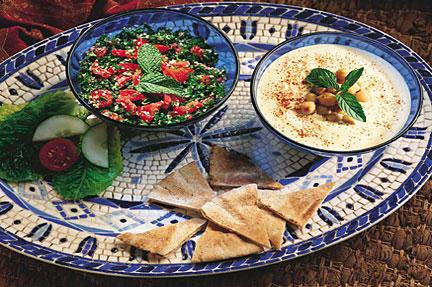
Continuity and Adaptation in Arab American Foodways by Lockwood & Lockwood (2000)
Summary and Reflection: This article details the presence, nature, and evolutionary identity of Arab food brought by Arab immigrants to urban Detroit. While the authors, Lockwood and Lockwood (2000), begin their work with a comparison on becoming ethnic a parallel to becoming a new subculture (p. 515), their main focus becomes about the diffusion of Arab food and foodways (how food is associated, used, presented, prepared, shared, taught, etc.) in Detroit in the Arab diaspora.
One of the strongest points made early on is that in any immigration story, one cannot make blanket generalizations about a sending country's population based on the receiving country's immigrant intake. For example, immigrants are always being drawn more heavily from certain regions within a country, from certain socio-economic conditions, religious groups, etc. (p. 515). Clearly, this can be better understood when considering our own nation—as diverse as we are from the Midwest to the South, the East Coast and West Coast, not to mention the diversity even within those regions. So it is when immigrants arrive here now, whether they are low-income Mexican laborers, persecuted Hmong, or asylum-seeking Somalis.
Such immigrant "pre-screening" has repercussions on the receiving country's perceptions of the immigrant group and their country of origin as well. Speaking specifically to food, as this article does, I can't help but think of Italian cuisine...that is, Italian cuisine as it is popularly understood in the U.S. (and again, more specifically, within my socio-economic bracket and in a Midwestern state). Naturally, the most common elements of Italian cuisine for me are spaghetti with tomato and meat sauce, pizza, lasagna, chicken parmesan, etc. Heavy on the melty white cheese, rich tomato sauch, meatballs and pasta. Of course, once I actually went to Italy and traveled to the various regions of that very diverse (albeit small) country, I was amazed as my Italian food paradigm was smashed to smithereens---and I mean that in a good way. Italian food—the "real" kind—is as delicious as it is diverse. And even though I found places that were purportedly "authentic", none of the versions of pizza, spaghetti bolognese (the tomato meat sauce we know), or lasagna that I sampled tasted like "home". Whether in flavor, texture, serving style, or ingredients, the details had invariably changed even in these Italian American standards.
The Lockwood & Lockwood focuses on these phenomena related to Arab American food in Detroit, examining how Arab food culture was first introduced and eventually diffused throughout the city, and how new waves of Arab immigrants are contributing to the ongoing story of Arab American food. Not surprisingly, the Italian example highlights similarities and potential future outcomes for the Arab Americans. First off, within the Arab community (spanning several countries, not just one), the Lebanese have emerged as the front runner in restaurant and grocery culture, thanks in part to having maintained a similar food commerce culture back home. This isn't true for all Arab countries. Now in the US, many non-Lebanese Arabs shop in the Lebanese markets as it is the best way to access the items and ingredients they need. Simultaneously, Lebanese markets are now carrying many traditionally non-Lebanese food items to cater to the demands of the customers.
Such "blending" is also occurring on restaurant menus, where items like "hummus" and "Greek salad" are becoming ubiquitous. And while to a culturally aware Arab, the nuanced flavors of the hummus can reveal themselves to be truly Lebanese versus truly Palestinian, the greater effect is that to the uninitiated or outsider perspective, such Lebanese (or insert other name) restaurants and markets present an image or idea about what Lebanese food is, and this notion/understanding is fed to the American market, thus slowly but surely reshaping its identity.
Food Sharing
In class this week we were all invited to bring in a food item to share as we discussed the article (but mostly focused on our own ideas related to culture, globalization, and food). I brought in Tajín, a Mexican seasoning you sprinkle on top of cut fruits or vegetables, like oranges, mangoes, and jicama. Some of the students had already tried Tajín and were familiar with it.
Questions & Thoughts:It was definitely great bringing in the different food items...I most appreciated Muhammad's grandmother's injera bread (delicious and different), but how fascinating the way people just "perk up" around food in general. As we went around the room, each of us really enjoyed talking and sharing about our food contributions and often had stories and reasons attached to why some particular food item was significant. Clearly, the emotional connections are strong---maybe as strong as the biological connections. These are important things I'm considering as I work on my semester project, which of course also deals with food--and foodways.
Monday, March 31, 2008
Week No. 10 of 16
Guest Speaker: Samaneh Vahaji
Summary & Reflections: This week in class Samaneh Vahaji, a 23-year old Iranian woman who is an undergraduate student in architecture at the UofM, came to talk to us about veiled women, including housing considerations, and her own personal experience as a veiled woman living in the United States. She began her talk with a Powerpoint presentation, explaining the religious motivations of muslim women to cover themselves in the presence of non-relative males. She also mentioned the poetry of a famous Iranian poet who wrote a verse explaining the reasons for women wearing the veil in terms of metaphors of men as water and women as fire. When there is no screen between the two, water dominates fire by extinguishing it. But if you add a screen between the two, like a clay pot for example, the fire will eventually heat the water, and even cause it to evaporate eventually. She used this example to counter some commonly held misconceptions on the part of westerners who view veiled women as oppressed.
At first Samaneh seemed quite nervous talking to us—this is understandable, since giving a talk in front of a room of strangers is always stressful. But I really admired her confidence to stand before us and speak frankly about her religious beliefs and convictions in a very open way. Sure enough, within a few minutes, and especially once she sat down and joined in our circle discussion, she seemed very relaxed, and the entire class was interested to hear more. It was noteworthy, I think, that the majority of our questions dealt with non-specifically design questions...It seemed we were all very eager to first understand her as a person...how did she handle day to day things? How did she date the man she eventually married? What does she look like under the veil? The kinds of questions that we were asking I think was particularly revealing of our own lack of interaction with veiled women, and probably with muslims in general. We know so very little about her life, beliefs, and day to day....it was more important to answer some of those basic human questions first.
Questions: I was surprised myself to be so fascinated by Samaneh. As she spoke I felt the veil having the opposite from intended effect on me! I grew so curious about her, what could she look like under that veil?! What does she think about the way we dress? I was glad when someone asked that question that I also wanted to hear the answer to. She was a great visitor to our class in the sense that she brought the real issues of "similarity" and "difference" right into our circle of desks. The difference was before our eyes. The similarity had to be coaxed out by our eager curiosity. Eventually, it was.
Hmong American New Year's dress: The display of ethnicity, by Annette Lynch (1995)
Summary & Reflections: This article by DHA alum Lynch talked about the ways in which displaced Hmong refugees living in the United States are maintaining ties to their Laotian culture while blending in elements of the new culture in the United States. Lynch talks about some differences across generations, but focuses her attention on the young people and traditional dress, which comes out mainly at Hmong New Year. What is interesting, is that as we pointed out in discussion, it's not always easy to tell a Hmong on the street, since their everyday dress may look completely "normal" to us---unlike a very easily distinguished veiled woman like Sameneh. But for the New Year's celebration, the Hmong bring out their traditional clothing with its painstaking handiwork...What is interesting, as Lynch points out, is how this "traditional" handcrafted clothing has changed in America. Now, the borders between Hmong clans are blurred (the totemic boundaries), but the ethnic boundary is stronger, as disparate Hmong subgroups have found solidarity in their Hmongness against dominant White American society. What they are facing culturally, politically, socially, and geographically is now being reflected in New Year's costume. Examples given included the blending of White and Green Hmong dress styles---something that never happened back in Laos, but is now commonplace in the U.S. Other cited examples showed complete breaks with Laotian customs, and new breakthroughs made possible by wealth, materials, and techniques acquired only since arriving in the U.S.
Questions: None, really. This was a well-written article that raised great points and highlighted some important ways in which dress is reflecting a shifting cultural identity under stress of transition. I do wish that more photographs had been included along with her written descriptions of White and Green styles. I'm not sure what else to comment on, the article was straightforward, and our discussion was somewhat brief.
Summary & Reflections: This week in class Samaneh Vahaji, a 23-year old Iranian woman who is an undergraduate student in architecture at the UofM, came to talk to us about veiled women, including housing considerations, and her own personal experience as a veiled woman living in the United States. She began her talk with a Powerpoint presentation, explaining the religious motivations of muslim women to cover themselves in the presence of non-relative males. She also mentioned the poetry of a famous Iranian poet who wrote a verse explaining the reasons for women wearing the veil in terms of metaphors of men as water and women as fire. When there is no screen between the two, water dominates fire by extinguishing it. But if you add a screen between the two, like a clay pot for example, the fire will eventually heat the water, and even cause it to evaporate eventually. She used this example to counter some commonly held misconceptions on the part of westerners who view veiled women as oppressed.
At first Samaneh seemed quite nervous talking to us—this is understandable, since giving a talk in front of a room of strangers is always stressful. But I really admired her confidence to stand before us and speak frankly about her religious beliefs and convictions in a very open way. Sure enough, within a few minutes, and especially once she sat down and joined in our circle discussion, she seemed very relaxed, and the entire class was interested to hear more. It was noteworthy, I think, that the majority of our questions dealt with non-specifically design questions...It seemed we were all very eager to first understand her as a person...how did she handle day to day things? How did she date the man she eventually married? What does she look like under the veil? The kinds of questions that we were asking I think was particularly revealing of our own lack of interaction with veiled women, and probably with muslims in general. We know so very little about her life, beliefs, and day to day....it was more important to answer some of those basic human questions first.
Questions: I was surprised myself to be so fascinated by Samaneh. As she spoke I felt the veil having the opposite from intended effect on me! I grew so curious about her, what could she look like under that veil?! What does she think about the way we dress? I was glad when someone asked that question that I also wanted to hear the answer to. She was a great visitor to our class in the sense that she brought the real issues of "similarity" and "difference" right into our circle of desks. The difference was before our eyes. The similarity had to be coaxed out by our eager curiosity. Eventually, it was.
Hmong American New Year's dress: The display of ethnicity, by Annette Lynch (1995)
Summary & Reflections: This article by DHA alum Lynch talked about the ways in which displaced Hmong refugees living in the United States are maintaining ties to their Laotian culture while blending in elements of the new culture in the United States. Lynch talks about some differences across generations, but focuses her attention on the young people and traditional dress, which comes out mainly at Hmong New Year. What is interesting, is that as we pointed out in discussion, it's not always easy to tell a Hmong on the street, since their everyday dress may look completely "normal" to us---unlike a very easily distinguished veiled woman like Sameneh. But for the New Year's celebration, the Hmong bring out their traditional clothing with its painstaking handiwork...What is interesting, as Lynch points out, is how this "traditional" handcrafted clothing has changed in America. Now, the borders between Hmong clans are blurred (the totemic boundaries), but the ethnic boundary is stronger, as disparate Hmong subgroups have found solidarity in their Hmongness against dominant White American society. What they are facing culturally, politically, socially, and geographically is now being reflected in New Year's costume. Examples given included the blending of White and Green Hmong dress styles---something that never happened back in Laos, but is now commonplace in the U.S. Other cited examples showed complete breaks with Laotian customs, and new breakthroughs made possible by wealth, materials, and techniques acquired only since arriving in the U.S.
Questions: None, really. This was a well-written article that raised great points and highlighted some important ways in which dress is reflecting a shifting cultural identity under stress of transition. I do wish that more photographs had been included along with her written descriptions of White and Green styles. I'm not sure what else to comment on, the article was straightforward, and our discussion was somewhat brief.
Wednesday, March 19, 2008
Week No. 8 of 16
 Jump Ahead: April 19th Class Trip to Pangea Theater's D'Lo show
Summary & Reflections: The show, presented at Intermedia Arts, was a one-woman montage of monologues interspersed with video bits featuring herself and her family, dealing with the life experiences of a young woman growing up gay and loving hip-hop in an immigrant Sri Lankan, Hindu family.
Talent wise, there's nothing really more to say. D'Lo was wonderful--very entertaining, very adept at taking on each of the multiple characters she assumed, both in costume and in persona. And she was extraordinarily convincing in this aspect—at first i didn't even know it was the same person when the mother came onstage! D'Lo's humor also helped keep the show's pace moving forward, as well as lighten the load of some of the heavier topics covered—like violence, homosexuality and discrimination, etc.
I especially appreciated what D'Lo was able to achieve as an artist in terms of utilizing such a s small stage and so few props. It was amazing the way she can captivate an audience on those terms and engage their interest as equally as if we were watching a Hollywood movie on a large theater screen. The immediacy and the life-quality of the theater as she used it was awesome.
Questions: It was a bit challenging for me to come and see this show, I can't lie. I wasn't that thrilled with it, not knowing what issues would be dealt with, and feeling like with all the amazing shows dealing with globalization, why this one? I was happy that real themes related to immigration and identity came through so strongly in the production. And I respect D'Lo's courage in facing her identity and embracing it despite the costs. It is, like I said, challenging for me, because it's not the framework I was raised in. Until my college years, I never really confronted anything dealing with transgenderism, so let's chalk it up to my culture as well. Still, after thinking about this for some time, I believe it is possible for our 2 views to coexist. I can respect her as an artist, as an individual, and as a human being, and we definitely come together in believing that to discriminate against someone for who they are is simply wrong. I ask the same respect of others, I have to offer that in return. It's a matter of not getting caught up in feeling that we all need to be the same--in this case, regarding our gender, dress, and sexual identities. Obviously we don't have to and we can't be!
Saturday, March 8, 2008
Week No. 7 of 16
Proposal Sharing (Dr. Hadjiyanni is at IDEC)
We had no readings assigned for this week. Instead, we used the class time to go around the room, share our semester project proposals and then get feedback from the other students. Because I've been still struggling somewhat to identify the "problem" that I can design a solution for, I came to class with very rough ideas of what I aim to do. Having narrowed it down to food, I explained how food is a pivotal point for Mexican immigrants to Minnesota to reconnect with home--through flavors, smells, textures, colors, familiar food brands, through the shopping experience in the Mexican mercados, through the cooking techniques that are employed (the physical process of cooking), and also through the eating and sharing and gathering with others—not to mention celebrations—that center around food.
In the urban exploration, food emerged as a very available, visible point of cultural connection with Mexico, along with Internet and phone card sales, Money transferring services, and music and television. Often all of these things were lumped together around food, either in restaurants offering live music or TVs tuned to Spanish-language channels, or in mercados that offer various remittance/phone/Internet services in addition to groceries.
As an identified problem (needing clarification through further research and probably, in-person interviews/surveys), I am positing that the need to connect with home (Mexico) is often fulfilled through food—because of its immediacy, relative availability, and relative authenticity (flavors can cross borders). Additionally, food functions to support individuals both physically as sustenance for the body, but also emotionally, as comfort for the soul. I also recall reading at some point that smell is our most acute human sense, and the most powerfully linked to memory. Of course, taste is highly dependent upon our sense of smell, which is why kids plug their noses when forced to eat something distasteful...without our sense of smell, taste loses much of its "flavor". But I digress...Food is powerful, taste and smell in particular are powerful. Eating releases aroma, but cooking even moreso. Also, the physical act (bodily performance) of cooking (and all its related micro-activities, from buying the ingredients to washing the dishes) can become a ritualized act of community, identity building, and reconnection with Mexico and "home".
For some, however, I am hypothesizing that they do not cook—perhaps they don't know how, they never learned, traditional roles in Mexico had the women preparing the food (perceptions of what is "macho", men are often here alone, ingredients may not be available, "White" grocery stores seem intimidating, etc.
Other potential problems, therefore: What are the single men here eating? Are they getting balanced meals or subsisting on frozen/fast foods? How are they sustaining their emotional well-being? Would they like to know how to cook some basic foods? Also, for the many Mexican/Latino people living outside the Twin Cities metro area (where access to restaurants, mercados, and other points of "connection" are easy to find, how are the rural immigrants getting by? What are the unique challenges they face?
Given the variety of potential problems, my next step needs to be a narrowing down to a single problem. This is likely going to require talking to people, probably mostly single men, since I believe most women already know how to cook Mexican food (if they are immigrants---not speaking to 2nd generation or later).
Depending on the identified problem, my solution will emerge. Some of the potential solutions I have suggested to the class and in my proposal that relate to the potential problems include: a cooking demonstration on DVD, since visual communication and images reinforce the instructions, and many people have TVs and DVD players even if they don't have computers and Internet, and even if they do not know how to read. Another design idea to encourage male cooking in the home (already many men cook in restaurants as jobs), to design aprons, kitchen towels, and oven mitts that have masculine aesthetics, and possibly soccer team emblems.
In class, we had some good discussion, sharing, and feedback around the idea of working with rural grocery stores to enhance understanding and availability of Mexican cuisine, both to rural immigrants and to rural Whites. Designing a graphic end cap for a grocer's display could group together and promote certain ingredients for sale, while take-away recipe cards (bilingual or heavily illustrated) work across cultures to instruct in recipe preparation. For example, a display in the produce section can promote an easy and authentic guacamole recipe.
Small town grocers struggle to provide "new" items to customers because of the high cost of purchasing in smaller amounts. By promoting and advertising to both Mexican and non-Mexican customers, the chance of meeting the necessary cost margins for the grocer is increased, making the store more likely to provide Mexican ingredients in a rural setting, and making it easier for Mexicans to connect through food without having to drive to the Cities.
We had no readings assigned for this week. Instead, we used the class time to go around the room, share our semester project proposals and then get feedback from the other students. Because I've been still struggling somewhat to identify the "problem" that I can design a solution for, I came to class with very rough ideas of what I aim to do. Having narrowed it down to food, I explained how food is a pivotal point for Mexican immigrants to Minnesota to reconnect with home--through flavors, smells, textures, colors, familiar food brands, through the shopping experience in the Mexican mercados, through the cooking techniques that are employed (the physical process of cooking), and also through the eating and sharing and gathering with others—not to mention celebrations—that center around food.
In the urban exploration, food emerged as a very available, visible point of cultural connection with Mexico, along with Internet and phone card sales, Money transferring services, and music and television. Often all of these things were lumped together around food, either in restaurants offering live music or TVs tuned to Spanish-language channels, or in mercados that offer various remittance/phone/Internet services in addition to groceries.
As an identified problem (needing clarification through further research and probably, in-person interviews/surveys), I am positing that the need to connect with home (Mexico) is often fulfilled through food—because of its immediacy, relative availability, and relative authenticity (flavors can cross borders). Additionally, food functions to support individuals both physically as sustenance for the body, but also emotionally, as comfort for the soul. I also recall reading at some point that smell is our most acute human sense, and the most powerfully linked to memory. Of course, taste is highly dependent upon our sense of smell, which is why kids plug their noses when forced to eat something distasteful...without our sense of smell, taste loses much of its "flavor". But I digress...Food is powerful, taste and smell in particular are powerful. Eating releases aroma, but cooking even moreso. Also, the physical act (bodily performance) of cooking (and all its related micro-activities, from buying the ingredients to washing the dishes) can become a ritualized act of community, identity building, and reconnection with Mexico and "home".
For some, however, I am hypothesizing that they do not cook—perhaps they don't know how, they never learned, traditional roles in Mexico had the women preparing the food (perceptions of what is "macho", men are often here alone, ingredients may not be available, "White" grocery stores seem intimidating, etc.
Other potential problems, therefore: What are the single men here eating? Are they getting balanced meals or subsisting on frozen/fast foods? How are they sustaining their emotional well-being? Would they like to know how to cook some basic foods? Also, for the many Mexican/Latino people living outside the Twin Cities metro area (where access to restaurants, mercados, and other points of "connection" are easy to find, how are the rural immigrants getting by? What are the unique challenges they face?
Given the variety of potential problems, my next step needs to be a narrowing down to a single problem. This is likely going to require talking to people, probably mostly single men, since I believe most women already know how to cook Mexican food (if they are immigrants---not speaking to 2nd generation or later).
Depending on the identified problem, my solution will emerge. Some of the potential solutions I have suggested to the class and in my proposal that relate to the potential problems include: a cooking demonstration on DVD, since visual communication and images reinforce the instructions, and many people have TVs and DVD players even if they don't have computers and Internet, and even if they do not know how to read. Another design idea to encourage male cooking in the home (already many men cook in restaurants as jobs), to design aprons, kitchen towels, and oven mitts that have masculine aesthetics, and possibly soccer team emblems.
In class, we had some good discussion, sharing, and feedback around the idea of working with rural grocery stores to enhance understanding and availability of Mexican cuisine, both to rural immigrants and to rural Whites. Designing a graphic end cap for a grocer's display could group together and promote certain ingredients for sale, while take-away recipe cards (bilingual or heavily illustrated) work across cultures to instruct in recipe preparation. For example, a display in the produce section can promote an easy and authentic guacamole recipe.
Small town grocers struggle to provide "new" items to customers because of the high cost of purchasing in smaller amounts. By promoting and advertising to both Mexican and non-Mexican customers, the chance of meeting the necessary cost margins for the grocer is increased, making the store more likely to provide Mexican ingredients in a rural setting, and making it easier for Mexicans to connect through food without having to drive to the Cities.
Thursday, February 28, 2008
Week No. 6 of 16
Eggener, Keith L. 2002. Placing Resistance: A Critique of Critical Regionalism
Summary and Reflection: In this article, Eggener presents a solid discussion of the concept of Critical Regionalism, it's definitions, proponents, and history, and then follows with a persuasive of critique of its limitations and possible breaking points. Eggener's main goal is to reveal the shortcomings of such a concept, and why in the end (in his opinion), critical regionalism at best, pointless (he says those principal architects honored as leading critical regionalist designers are in fact guilty of pastiche and commodification of culture) and at worst, dangerous (citing Nazism and other forms of hyper-nationalism).
Eggener squares his arguments on the work of renowned Mexican architect Luis Barragán (1902-1988), winner of the Pritzker Prize (1980). As Eggener explains, Barragán's work was initially only mildly received in his home country, but later embraced by the international design community, which lauded him and ultimately came to recognize him as the most important Mexican architect of the 20th century, and a true example of critical regionalist work in the midst of the modernist era.
To be sure, Barragán studied under modern minimalist Le Corbusier whom he greatly admired, as well as Mies van der Rohe, and these designers heavily influenced his work. Furthermore, Barragán's travels in Spain (Andalucía in particular), were sources of European influence in his architecture. Such arguments are used then by Eggener to establish a position that Barragán's work is too influenced and "commissioned" by the "International" or European style to be truly Mexican—truly regional.
In our discussion of the article, the class tried to come to an understanding of what critical regionalism is, and whether or not it holds it weight as a design genre in the age of globalization. We had some disagreements about this, which is expected since this article was pure theory and Eggener's own bias screams loudly through the lines.
Questions: I personally think that critical regionalism is a valid label, but one that (like all labels today) must be continually reassessed. The best summary definition of critical regionalism therefore, in my opinion, is the one that affirms it as the design that reflects and supports the ways of living in that particular "place". This kind of understanding emphasizes geography (a key component of what critical regionalism was originally supposed to do), but also re-establishes the human element--apparently lacking to a great extent in modernist design, but key in the new post-modern era of human factors. Such a definition also allows for change, as the way people use space is a reflection of both time and place; not reworking archaic designs for nostalgia alone, but accommodating a local aesthetic in ways that have local function and meaning.
Karam, Azza M. 2000. Islamisms and the decivilising processes of globalisation.
Summary and Reflection: This short paper, published shortly before September 11th, brought about some good discussion on the nature of fundamentalism in religions (not just Islam), and also bore some stark predictions regarding the state of terrorism and the ways in which these things have been influenced by globalizing society and technology---namely, information, weapons transfer, funding, and organizing are all handled instantaneously now, and across continents. Another factor contributing to this, is apparent the mass migration that is taking place globally. Tasoulla brought up a CNN article published this week about Americans switching religions and dropping out of their faith organizations. On the other hand, research is showing that the United States remains the most "religious" post-industrial nation-society in terms of its daily practices. Furthermore, research studies have shown that immigrants are more likely to become more religious in their adopted country. Mohammad spoke up at this point in class and seemed to agree, that religiosity here seems more pronounced than back in Somalia. His thought was that it needed to be so in order to counter the many pressures that Somali culture faces otherwise living in the United States (TV sex and violence, just to name one example).
Questions: From the article and the discussion that ensued, we didn't go this far, but I begin to wonder whether the conditions engendered by globalization and the age of migration do not help to promote fundamentalist religiosity. I consider as well our political climate here in the U.S., and the ways in which right-wing politics have been linked to the conservative religious groups, and even some of the policies of George W. Bush. Of course, my questions are, is this a mark of globalization, or simply a natural ongoing cycle of beliefs that has happened throughout history (periods of this, that, etc.). Certainly this upcoming election is working hard to break with the patterns established by the Bush Administration...what will be the future changes for other governments abroad?
Monday, February 18, 2008
Week No. 5 of 16
Pader, Ellen J. 1993. Spatiality and Social Change: Domestic Space Use in Mexico and the United States.
Summary and Reflection: This article does a great job of highlighting the influence that the home space has over behaviors and in subtly modifying both behaviors and values. Indeed, one of the core differences between Anglo-Saxon Americans and Mexican Americans (I use American to denote people from the North or South American land masses, not citizenship of the United States), is the distinction between familism (collectivism) and individualism. Pader does a decent job explaining the two concepts, but she does a great job of providing examples of how home structure and socio-spatiality affect (supporting or suppressing) both ideals. To describe familism, she offers examples of semi- and non-private toilet areas, shared bedrooms and beds, and front patios that open to the street and where typical "back area" activities like washing, mending, and cooking take place. Contrasting with individualism, Anglo-Americans place moral and resale value on multiple bedrooms and multiple bathrooms with interior privacy locks, segregated "back areas" for laundering and cooking (away from guests' eyes), and formal spaces for receiving visitors. Overall, square footage found in Angl0-American housing in the United States was lower than the homes Pader studied in Mexico. The principle areas that were lacking in the U.S. were the outdoor (but enclosed) patio area and the indoor zaguán—two spaces that are defined by behaviors related to sharing, family togetherness, openness, and communication. As such, the patio and the zaguán may be interpreted as the most powerful Mexican architectural symbols of residential familism, and thus, the two spaces most at odds with United States' Anglo-Saxon values that promote individualism.
Based on these observations and research, Pader makes her main claim that because of the social and behavior-modifying powers of architectural spaces, and of the home space in particular, socio-spatial elements of a dominant culture can have the impact of colonization over another culture. When Mexican migrants come to live in the United States and they encounter housing that lacks the traditional patio and zaguán, their familial behavior patterns must necessarily change. However, Pader also covers in her research, the way that change progresses over time (in 2nd and 3rd generation Mexican families having settled in the United States), showing how preferences also change to reflect the dominant architectural aesthetic (and value system). She further elaborates on the effects of migration over values by discussing the preferences of Mexican migrants who have spent time in the United States, but later returned to Mexico. Aided by their financial gains in the North, they express both prosperity and modified values by adding onto their homes or building new ones that incorporate at least some aspects of Anglo-American housing.
Obviously Pader's article is a helpful resource to support arguments for culturally sensitive housing, particularly for the way in which she calls out the architectural colonization of subordinate cultures by the mainstream. Doing so has always seemed a bit contentious to me--the world colonize being a powerful one in my opinion, and the nature of voluntary migration seeming to fly in the face of the term---but words aside (although words are everything), it is clear by Pader's argument that spatiality not only influences behavior, when options are restricted, it can actually define behavior.
Our class discussion on the article was rather short, but touched on many parts of the article. The main idea that came out was the idea that while Pader elaborates well on spatialiaty as a concern of architecture and a way in which architecture mediates cultural practice/behaviors, and in turn, values, she does not elaborate on the programmatic concerns associated therein. It was then that we heard the presentation of the culturally sensitive design research that Dr. Hadjiyanni does, as the link between theory and practice in not only highlighting ways in which architecture affects and is affected by inhabitants, but taking it a step further to show how designers can enhance the ability of inhabitants to mediate, increasing their options and decreasing their associated stress.
Questions: Pader spent a lot of time looking at ways in which the traditional Jaliscan house was defined, as well as how returning Mexican sojourners from the U.S. were influenced by the architecture found north of the border. The work done in the culturally sensitive housing study is very much the other side of the story; how sojourners and immigrants are influencing housing while IN the United States. I would be interested to compare that process between Mexicans who plan to settle permanently (immigrants) versus those who plan to return to Mexico. I would anticipate that settling immigrants would be more interested in incorporating an American aesthetic more quickly and more comprehensively--even as they maintain ties to their Mexican roots. Conversely, I imagine that sojourners will be less invested overall, and less concerned with modification, thus "tolerating" conditions that they find uncomfortable since there is an attitude of temporariness.
Summary and Reflection: This article does a great job of highlighting the influence that the home space has over behaviors and in subtly modifying both behaviors and values. Indeed, one of the core differences between Anglo-Saxon Americans and Mexican Americans (I use American to denote people from the North or South American land masses, not citizenship of the United States), is the distinction between familism (collectivism) and individualism. Pader does a decent job explaining the two concepts, but she does a great job of providing examples of how home structure and socio-spatiality affect (supporting or suppressing) both ideals. To describe familism, she offers examples of semi- and non-private toilet areas, shared bedrooms and beds, and front patios that open to the street and where typical "back area" activities like washing, mending, and cooking take place. Contrasting with individualism, Anglo-Americans place moral and resale value on multiple bedrooms and multiple bathrooms with interior privacy locks, segregated "back areas" for laundering and cooking (away from guests' eyes), and formal spaces for receiving visitors. Overall, square footage found in Angl0-American housing in the United States was lower than the homes Pader studied in Mexico. The principle areas that were lacking in the U.S. were the outdoor (but enclosed) patio area and the indoor zaguán—two spaces that are defined by behaviors related to sharing, family togetherness, openness, and communication. As such, the patio and the zaguán may be interpreted as the most powerful Mexican architectural symbols of residential familism, and thus, the two spaces most at odds with United States' Anglo-Saxon values that promote individualism.
Based on these observations and research, Pader makes her main claim that because of the social and behavior-modifying powers of architectural spaces, and of the home space in particular, socio-spatial elements of a dominant culture can have the impact of colonization over another culture. When Mexican migrants come to live in the United States and they encounter housing that lacks the traditional patio and zaguán, their familial behavior patterns must necessarily change. However, Pader also covers in her research, the way that change progresses over time (in 2nd and 3rd generation Mexican families having settled in the United States), showing how preferences also change to reflect the dominant architectural aesthetic (and value system). She further elaborates on the effects of migration over values by discussing the preferences of Mexican migrants who have spent time in the United States, but later returned to Mexico. Aided by their financial gains in the North, they express both prosperity and modified values by adding onto their homes or building new ones that incorporate at least some aspects of Anglo-American housing.
Obviously Pader's article is a helpful resource to support arguments for culturally sensitive housing, particularly for the way in which she calls out the architectural colonization of subordinate cultures by the mainstream. Doing so has always seemed a bit contentious to me--the world colonize being a powerful one in my opinion, and the nature of voluntary migration seeming to fly in the face of the term---but words aside (although words are everything), it is clear by Pader's argument that spatiality not only influences behavior, when options are restricted, it can actually define behavior.
Our class discussion on the article was rather short, but touched on many parts of the article. The main idea that came out was the idea that while Pader elaborates well on spatialiaty as a concern of architecture and a way in which architecture mediates cultural practice/behaviors, and in turn, values, she does not elaborate on the programmatic concerns associated therein. It was then that we heard the presentation of the culturally sensitive design research that Dr. Hadjiyanni does, as the link between theory and practice in not only highlighting ways in which architecture affects and is affected by inhabitants, but taking it a step further to show how designers can enhance the ability of inhabitants to mediate, increasing their options and decreasing their associated stress.
Questions: Pader spent a lot of time looking at ways in which the traditional Jaliscan house was defined, as well as how returning Mexican sojourners from the U.S. were influenced by the architecture found north of the border. The work done in the culturally sensitive housing study is very much the other side of the story; how sojourners and immigrants are influencing housing while IN the United States. I would be interested to compare that process between Mexicans who plan to settle permanently (immigrants) versus those who plan to return to Mexico. I would anticipate that settling immigrants would be more interested in incorporating an American aesthetic more quickly and more comprehensively--even as they maintain ties to their Mexican roots. Conversely, I imagine that sojourners will be less invested overall, and less concerned with modification, thus "tolerating" conditions that they find uncomfortable since there is an attitude of temporariness.
Thursday, February 14, 2008
Week No. 4 of 16
 Gates, H. L. 1996. Planet Rap: Notes on the Globalization of Culture.
Summary and Reflection: Starting with Gates, then. The topic this week was culture and identity. Great articles. I'd already read Hall (good to read him again, though), and I found Gates' voice to be wonderful to read, very engaging, I loved the way he brought in all these various cultural references...diverse references too! From Vanilla Ice to T.S. Eliot. That alone says a lot about his own multiculturalism and mine.
Since we're focusing on culture, let me start by summarizing more or less the points that Gates makes with his essay. There are several. First off, the world is getting smaller, at least in some ways, thanks to technology. This is implicit in his description of Ulan Batar and the fact that MTV was widely popular in that tundra land. And yet, this kind of "sameness" or similarity afforded by a common video music channel, is challenged by the fact that at time, Gates presumed himself to be quite likely the only Black man in the city. And, as the only Black man traveling with a group of other non-Black Americans, his "difference", if only at skin-level, is already twofold.
I wonder (to myself), how did that trip to Ulan Batar change/affect Gates? I ask, because another point he makes is on the appropriation of hip-hop/rap music a la Vanilla Ice---a white man appropriating Afro-Carib/urban sounds, which are then sent to India and which re-emerge as "Cool Cool Water" when Hindi lyrics by a new Indian rapper are laid over the track. This is the example of globalization, of reappropriation (by the appropriator, the White Vanilla Ice initially), the sound of multiculturalism. Another example was the case of coca-colonization by Coca-Cola, the word's most recognized brand. As the then CEO pointed out, "We just want to refresh people...how is that colonization." Touche! But the counterpoint bears weight as well...dotting a country's highways and bi-ways with Coca-Cola billboards changes the aesthetic landscape---the visual evidence of a larger cultural shift. There is, arguably, common ground in Coca-Cola, just as there is in a Big Mac, or maybe in America...different people, different stories, sharing something in common. No matter how trivial, the larger social implications are worth noting.
Ultimately, finding a comprehensive Coca-Cola world is the key to a politically global federation...T.S. Eliot said this would be impossible without shared culture. So we manufacture global culture the way we manufacture Coke, and sell it to the world. Easier said than done; according to Gates' sources, impossible.
Questions: See end of entry (combined with Hall).
Hall, S. 2000. Cultural Identity and Diaspora.
Summary & Reflections: Stuart Hall's paper on cultural identity brings up the main point of similarity and difference as being the two axes on which cultural identity (as an ongoing process rather than a point of origin) evolves. Interesting to note how Gates referes to similarity and difference in his piece; of course Hall's writing was initially published earlier than 2000...what was the original publication date?
So when we talk about similarity, we look at levels, at layers, chunks, aspects even. We are all Minnesotans, all Americans, all Norwegian-Americans, all blonde and blue-eyed, etc. Or, we are a class of different ethnic backgrounds, races, nationalities, ages, home states, etc., but similar in that we are from the University of Minnesota.
Hall is right in saying that this opens up a whole new realm of conversation, since no longer is one's cultural heritage limited to the "core" nugget of origination of the self---where would mine even be? Norway? I don't know a single person in Norway. Not one. And yet I'm 75% Norwegian heritage.
My similarity with Norway ends at bloodlines and physical features perhaps. Then, it is pure difference; my language, my values, etc. Arguably, I have equal levels (though different kinds) of similarity with Spain and my cultural identification with that cultural group; through language, cultural references, "family" and friend networks, food, music, art...different through bloodlines and physical features, however..And visibly so from roughly 5 kilometers distance! (I could never pass for Spanish).
The idea of culture being defined between points of similarity (cohesion, continuity) and difference (rupture, opposition), is a rich territory to explore. Furthermore, since it can be easier for groups to define themselves on their differences..people aren't always aware of what is similar across their group, but they are frequently conscious of why they are different from others. This can be helpful in cases of building cohesion across cultural groups, and even within fractionalized cultural groups.
Our class discussion was good today--helpful in particular in doing the diagram on the board (beautiful for its formal qualitites alone!). Fascinating to see how different we all are just within the one room. For a few moments, I felt pressured to not mention socio-economic status during our discussion of what makes us who we are/what contributes to identity. Still thinking about it a few days later, though, and I definitely stand by that statement. As Americans, even the lower-middle class people --everyone for that matter, enjoys a standard of living that is in the very top percentage of the entire world. Not acknowledging that, not understanding how good we have it, is a major oversight. And certainly, the fact that we have paved highways, well-equipped hospitals, public school free through 12th grade, etc. etc. relates to the construction of our national identity (the rest of the world sees us for what we are) as well as our personal identities (the fact that we have so much time to devote to consumerism, media, art and scholarship, recreation, etc. simply because we have our basic needs taken care of for the most part).
When I say that socio-economic status is important to my identity, I'm simply recognizing that without the resources I've grown up with, I would not be who I am. Talk to my friend Maria who came from Mexico; getting new shoes was the highlight of the year---and they were hand-me-downs. Listen to her talk about standing outside restaurants just so she could fill her belly by "eating the smells" of meat and tortillas.
I am critical of Americans who fail to recognize their own privilege and position. I am not a rich girl by comparative MN or U.S. standards perhaps, but in the global scheme, I certainly am. It's not something to chase after necessarily, or to say that money is the end-all----it's not. And American quality of life, happiness factors, may not live up to that of much poorer countries. I'm simply stating that socio-economic status is a core influencer of personal identity, but culture as well.
Questions: My favorite point of Gates' writing is the resituating of American History as a multicultural from the get-go; a nation populated by diverse indigenous people, fed by diverse European and African and Asian influx, mostly poor, always half female, etc. This is exactly my point. We've always been this way. It is more a matter of changing our discourse and frameworks with which we examine ourselves--thus changing the way we deal with ourselves. If we reconsider, therefore, how we examine Mexican people in Minnesota, it will change the way we deal with them. Re-framing the issue goes a long way in this regard; examples include the famous upside-down map of North and South America (South is North), reflected as well in the song by Guatemalan artist Ricardo Arjona, "si el Norte fuera el sur" (If the North was the South). A simple change of language can have a similar effect; North and South America versus "The Americas" or simply "America". In some ways, we have commandeered the term "American", when in reality, the term applies to far more people than those living (legally) within the U.S. borders. Examining these points of context and framing are all ways in which we can learn more about cultural identity construction, negotiation, and cooperation in a globalizing world, alongside Hall's comment on Jamaican identity being influenced by the Civil Rights movement in the U.S...new identity definitions emerging from re-contextualized understandings and perceptions.
Tuesday, February 5, 2008
Week No. 3 of 16
Fischer, EF. (1999). Cultural logic and Maya Identity
 Lake Atitlan, Guatemala.
Unfortunately, I will miss the class on Friday while I am out doing my thesis defense, so I have to use this journal entry to respond to the two articles we read for this week without the benefit of a group discussion. This is especially unfortunate, because I found this first article (Fischer) to be particularly difficult to understand completely. I kept getting bogged down in the language, the unfamiliar terminology (could he please define "constructivism"?), and the l e n g t h of the article. Probably magnified by the fact that in the JStor version I couldn't zoom in on the tiny text, so the reading was not only difficult, but tiresome.
Summary & Reflection: What I took away from the article came more from the analysis portion of the paper...the descriptive bits about Maya cultural identity, and how it is being preserved. I studied International Relations in college, with an emphasis in Latin America, so I have at least a basic familiarity with Mayan culture. I read the book, Yo, Rigoberta Menchú. I had researched the mass killings the took place in the early 80s. Incidentally, this past weekend I had Sunday brunch with a friend and her husband (who is from El Salvador), who told us about his family's near escape from that rash of violence. They had gone on a vacation for Easter, so were not in the village when the School of the America's trained killing squad rolled in. According to José's story, the seemingly benign officers hung flyers and used loudspeakers to announce a town meeting--all residents were to attend, regardless of age. Once the villagers were assembled in the central plaza, a rain of machine gun bullets knocked them down. Among them were José's uncle and several childhood friends.
José's ancestry is Maya, but as he acknowledges, his fair coloring suggests a good helping of European blood as well. He doesn't speak Maya, either, but he speaks both Spanish (native tongue) and English (fluently). He went to part of high school and all of college in various parts of the U.S. (mainly East Coast), and he now lives in Roseville and works for the Federal Reserve bank. His wife is originally from Mexico, and they met in California. Their 2 year-old son bears the anglicized version of his father's name; Joseph.
According to some of the Maya respondents in the Pilkington et al. article, José has crossed over to the ladino side. His k'u'x (heart/soul/essence) lacking "centering" or "balance" with the cosmic processes. In order to re-center, he would return to his town, his three stone hearth, perhaps offer some kind of sacrifice (blood, for example) to the ground, and otherwise participate in Mayan cosmic rites governed by tradition and the Mayan calendar.
José appears uninterested in doing so, however, as his home now is a cute 1 1/2 story house behind the Rosedale Mall. Even the name given to his son reveals his intentions to stay and nurture the roots he has established far from the village of his childhood. He tells me that some of the townspeople (survivors and family of survivors) are just now beginning to return to the village. But it's hard, he says. Everything must be rebuilt. And not just the buildings...everything.
The Cultural logic of the Maya was significantly damaged by that attack, and countless others through post-Columbian history. Questions of rebuilding are at the forefront of indigenous activist movements. But while the longstanding worldview of the Mayan culture was one of fractured, localized groups with mutually un-intelligble dialects, a new pan-Maya movement is attempting to gather up these disparate branches of Maya' identity under a single Maya' identified umbrella. Helping the pan-Maya activists is a shared cultural value/logic among Maya peoples who tend to see unity in apparently divergent groups.
"Cultural logic is defined as generative principles expressed through cognitive schemas that promote inter-subjective continuity and are conditioned by social, political, and economic contingencies. Both change and continuity are integral to the concept of cultural logic, and I present evidence that they are mutually constitutive in lived experience (Fischer, 1999, p. 474). As such, cultural logic is defined as the glue holding cultural elements together. As a visual example of this idea, I think of a brick wall and the mortar or grout between the bricks as the cultural logic. Clearly, the brick wall cannot stand without the mortar, nor can the mortar alone create a wall. All elements depend on each other, supporting eachother, and held together and in place by the surrounding, cohesive glue. For the Maya, cultural logic can be interpreted in various ways, and the Pan-Mayanist movement is attempting to revise the groups' cultural logic in a way that encompasses that immense diversity that exists even within their own ethnic group.
Questions: It was interesting to me to read how problems associated with substance abuse, violence, and mental health, as well as personal choices in religion or language adoption could all be attributed to simply to a "de-centering" or imbalance of the k'u'x. Of course adhering to and espousing this very belief is at the core of Maya identity, and verily, going against it is indeed going against Maya identity. Of course, even if it is seemingly simplistic, it brings up questions for applying such simplistic "prescriptions" for our own cultural de-centering. How can one feel more centered in his or her Mexican identity when living in Minnesota? A trip to a Mexican market? A meal of authentic Mexican foods? Turning the volume up to hear Mexican music while driving in your car? On some level, and to various degrees, all of these activities can relate to an active, prescriptive "centering" of Mexican k'u'x...but since k'u'x is linguistically tied to the Maya alone, let us use another word...alma (soul), identidad (identity), or perhaps, embracing Mexican vernacular, "sabor" (flavor). Perhpas sabor is a great word to describe the kind of centering that happens when living outside of Mexico...a key point of difference between Mexican and U.S. identity, from a Mexican perspective, for the key choice of language (sabor being a commonly used expression to describe personality even moreso than food), and to highlight a perceived "flavorlessness" of the United States Anglo-Saxon...not to mention the tastes and smells of "home" that the word conjures. "Sabor" as an identity aspect can imply the addition of spice, the modification of recipes, and the "art" of cooking--a dash of this, a pinch of that, to create a combination of elements that nourishes, sustains, comforts, and speaks.
Pilkington, H et. al. (2002). Looking west? Cultural globalization and Russian youth culture

Summary & Reflection: Interesting and much easier to read article. Can begin to appreciate the unique situation of Russia, given it's geographical location, caught between East and West, combined with its years of isolation behind the iron curtain, and deeply embedded cultural values that are fundamentally at odds with aspects (both real and perceived) of American life (specifically) and the Western world (in general).
Looking to Russian youth as a benchmark of cultural change is a very smart move on the part of the authors. Because they are still (presumably) actively forming their identities, they will be more likely than older generations to consider the questions posed by the researchers. Of course, looking at this article with the general human ecology model could be very helpful as well (P_O_E_T). Speaking about technology, youth are typically more eager to adopt new technologies, and the article talks about global communications and travel as providing them with a wealth of access to Western influences in the post-Soviet era.
The Russian youth have also apparently conceived of their own unique response to the influence of Western/American culture. What was once (or still is for older generations) perceived as the "forbidden fruit"--ideologically dangerous but fundamentally desireable--is now considered "shallow" and imposing. Russian youth have figured out that the "West" is not a monolith; it is made of up unique countries with unique characters; France and the U.S. are NOT one. Nor are Western Europe and Southern Europe. They have grown in their connossieurship of the west, and are able to live with its "goods", but in greater part they shun its ideology.. Russian things are soulful, spiritual, meaningful. American things are now. They are, simply, to be consumed.
Questions: I'm grateful to this article for highlighting the fact the the U.S. is not the only country to affect influence over other countries. It seems to me a very ethnocentric view of ourselves to assume our own cultural hegemony (the West afterall, is more than just the United States, anyway), while delegitimizing the autonomy of the rest of the world. Russian youth are a good example of this---making it their own in the form of Russian Rap. Who really cares if it's good? You cannot judge it against American rap anyway, having emerged from an intirely different social, political, linguistic, and historical context. The new permutation has merit on its own, and for the very fact of its transglobal influence. If you can look at Russian rap in this way, it opens infinite doors for similar examinations of other phenomena where by globalizing influences, new art forms and means of cultural expression emerge.
Lake Atitlan, Guatemala.Unfortunately, I will miss the class on Friday while I am out doing my thesis defense, so I have to use this journal entry to respond to the two articles we read for this week without the benefit of a group discussion. This is especially unfortunate, because I found this first article (Fischer) to be particularly difficult to understand completely. I kept getting bogged down in the language, the unfamiliar terminology (could he please define "constructivism"?), and the l e n g t h of the article. Probably magnified by the fact that in the JStor version I couldn't zoom in on the tiny text, so the reading was not only difficult, but tiresome.
Summary & Reflection: What I took away from the article came more from the analysis portion of the paper...the descriptive bits about Maya cultural identity, and how it is being preserved. I studied International Relations in college, with an emphasis in Latin America, so I have at least a basic familiarity with Mayan culture. I read the book, Yo, Rigoberta Menchú. I had researched the mass killings the took place in the early 80s. Incidentally, this past weekend I had Sunday brunch with a friend and her husband (who is from El Salvador), who told us about his family's near escape from that rash of violence. They had gone on a vacation for Easter, so were not in the village when the School of the America's trained killing squad rolled in. According to José's story, the seemingly benign officers hung flyers and used loudspeakers to announce a town meeting--all residents were to attend, regardless of age. Once the villagers were assembled in the central plaza, a rain of machine gun bullets knocked them down. Among them were José's uncle and several childhood friends.
José's ancestry is Maya, but as he acknowledges, his fair coloring suggests a good helping of European blood as well. He doesn't speak Maya, either, but he speaks both Spanish (native tongue) and English (fluently). He went to part of high school and all of college in various parts of the U.S. (mainly East Coast), and he now lives in Roseville and works for the Federal Reserve bank. His wife is originally from Mexico, and they met in California. Their 2 year-old son bears the anglicized version of his father's name; Joseph.
According to some of the Maya respondents in the Pilkington et al. article, José has crossed over to the ladino side. His k'u'x (heart/soul/essence) lacking "centering" or "balance" with the cosmic processes. In order to re-center, he would return to his town, his three stone hearth, perhaps offer some kind of sacrifice (blood, for example) to the ground, and otherwise participate in Mayan cosmic rites governed by tradition and the Mayan calendar.
José appears uninterested in doing so, however, as his home now is a cute 1 1/2 story house behind the Rosedale Mall. Even the name given to his son reveals his intentions to stay and nurture the roots he has established far from the village of his childhood. He tells me that some of the townspeople (survivors and family of survivors) are just now beginning to return to the village. But it's hard, he says. Everything must be rebuilt. And not just the buildings...everything.
The Cultural logic of the Maya was significantly damaged by that attack, and countless others through post-Columbian history. Questions of rebuilding are at the forefront of indigenous activist movements. But while the longstanding worldview of the Mayan culture was one of fractured, localized groups with mutually un-intelligble dialects, a new pan-Maya movement is attempting to gather up these disparate branches of Maya' identity under a single Maya' identified umbrella. Helping the pan-Maya activists is a shared cultural value/logic among Maya peoples who tend to see unity in apparently divergent groups.
"Cultural logic is defined as generative principles expressed through cognitive schemas that promote inter-subjective continuity and are conditioned by social, political, and economic contingencies. Both change and continuity are integral to the concept of cultural logic, and I present evidence that they are mutually constitutive in lived experience (Fischer, 1999, p. 474). As such, cultural logic is defined as the glue holding cultural elements together. As a visual example of this idea, I think of a brick wall and the mortar or grout between the bricks as the cultural logic. Clearly, the brick wall cannot stand without the mortar, nor can the mortar alone create a wall. All elements depend on each other, supporting eachother, and held together and in place by the surrounding, cohesive glue. For the Maya, cultural logic can be interpreted in various ways, and the Pan-Mayanist movement is attempting to revise the groups' cultural logic in a way that encompasses that immense diversity that exists even within their own ethnic group.
Questions: It was interesting to me to read how problems associated with substance abuse, violence, and mental health, as well as personal choices in religion or language adoption could all be attributed to simply to a "de-centering" or imbalance of the k'u'x. Of course adhering to and espousing this very belief is at the core of Maya identity, and verily, going against it is indeed going against Maya identity. Of course, even if it is seemingly simplistic, it brings up questions for applying such simplistic "prescriptions" for our own cultural de-centering. How can one feel more centered in his or her Mexican identity when living in Minnesota? A trip to a Mexican market? A meal of authentic Mexican foods? Turning the volume up to hear Mexican music while driving in your car? On some level, and to various degrees, all of these activities can relate to an active, prescriptive "centering" of Mexican k'u'x...but since k'u'x is linguistically tied to the Maya alone, let us use another word...alma (soul), identidad (identity), or perhaps, embracing Mexican vernacular, "sabor" (flavor). Perhpas sabor is a great word to describe the kind of centering that happens when living outside of Mexico...a key point of difference between Mexican and U.S. identity, from a Mexican perspective, for the key choice of language (sabor being a commonly used expression to describe personality even moreso than food), and to highlight a perceived "flavorlessness" of the United States Anglo-Saxon...not to mention the tastes and smells of "home" that the word conjures. "Sabor" as an identity aspect can imply the addition of spice, the modification of recipes, and the "art" of cooking--a dash of this, a pinch of that, to create a combination of elements that nourishes, sustains, comforts, and speaks.
Pilkington, H et. al. (2002). Looking west? Cultural globalization and Russian youth culture
Summary & Reflection: Interesting and much easier to read article. Can begin to appreciate the unique situation of Russia, given it's geographical location, caught between East and West, combined with its years of isolation behind the iron curtain, and deeply embedded cultural values that are fundamentally at odds with aspects (both real and perceived) of American life (specifically) and the Western world (in general).
Looking to Russian youth as a benchmark of cultural change is a very smart move on the part of the authors. Because they are still (presumably) actively forming their identities, they will be more likely than older generations to consider the questions posed by the researchers. Of course, looking at this article with the general human ecology model could be very helpful as well (P_O_E_T). Speaking about technology, youth are typically more eager to adopt new technologies, and the article talks about global communications and travel as providing them with a wealth of access to Western influences in the post-Soviet era.
The Russian youth have also apparently conceived of their own unique response to the influence of Western/American culture. What was once (or still is for older generations) perceived as the "forbidden fruit"--ideologically dangerous but fundamentally desireable--is now considered "shallow" and imposing. Russian youth have figured out that the "West" is not a monolith; it is made of up unique countries with unique characters; France and the U.S. are NOT one. Nor are Western Europe and Southern Europe. They have grown in their connossieurship of the west, and are able to live with its "goods", but in greater part they shun its ideology.. Russian things are soulful, spiritual, meaningful. American things are now. They are, simply, to be consumed.
Questions: I'm grateful to this article for highlighting the fact the the U.S. is not the only country to affect influence over other countries. It seems to me a very ethnocentric view of ourselves to assume our own cultural hegemony (the West afterall, is more than just the United States, anyway), while delegitimizing the autonomy of the rest of the world. Russian youth are a good example of this---making it their own in the form of Russian Rap. Who really cares if it's good? You cannot judge it against American rap anyway, having emerged from an intirely different social, political, linguistic, and historical context. The new permutation has merit on its own, and for the very fact of its transglobal influence. If you can look at Russian rap in this way, it opens infinite doors for similar examinations of other phenomena where by globalizing influences, new art forms and means of cultural expression emerge.
Friday, February 1, 2008
Week No. 2 of 16

Iyer, P. (2000). The Global Soul: Jet Lag, Shopping Malls, and the Search for Home
Summary & Reflection : Reading Iyer's article, I couldn't stop thinking about the style of the writing. I really enjoyed the narrative approach he took. And now I really want to see a picture of what he looks like. (Just added the pic, 2-5-08). I feel like the writing, in being so autobiographical, is more captivating, and I feel drawn in. Especially in the opening where he writes about the experience of losing his home in the fire (although notably, he does not elaborate on his feelings involved in that loss, but rather goes on to talk about how he's never felt at home). His account is detailed and action-packed, so when he starts to write about his encounter with his "unknown neigbhors", and the Mexican man down the mountain, I'm totally there with him, imagining the scene, sensing the precariousness not only of the trailer, but of their positions in the world...for both of them, the sense of home literally hanging in the balance, teetering on the edge of a mountain, the ground beneath essentially foundationless, shifty, made of quicksand, ready to slide. And still, they sit down and chat like neighbors.
For myself, I can only relate so much to a story like this one, so highly personal and so possessive in tone (he talks about the Global Soul with ownership, and admits that he's probably most at home in the foreign in-between land). I have roots, at least I claim to have them, and I try to nurture them simulataneously as I seek to integrate new cultures into my life. Of course, I also haven't racked up 1.5 million frequent flyer miles. His story is unique, but I get his point that there are others like him and even moreso. I can relate to the sense of inbetweenness, of not belonging, however. The most specifically global example from my own life being the reverse culture shock that I experienced in moving back to the United States after living more than a year in Madrid. It wasn't a huge problem at first; I came back some time in early June to my parents' house at the lake--the place where I grew up. But in late August, it was time to go back to college, back to Madison. My mom helped drive me back there (no car of my own) and find an apartment (since I still didn't have one, yet all my Madison friends did, having secured their housing that spring). As I walked with my mom down State Street, I looked around and noticed how store fronts had changed, cross streets that had been underconstruction and no longer were, faces of new freshmen everywhere, faces I had never seen before. This wasn't the Madison I remembered. And on top of it, I had nowhere to live. I missed Spain and my friends. And I started crying right there in the middle of State Street. I remember telling my mom that I didn't fit in anymore, and I never would.
This little personal narrative ties in with a lot of what Iyer discusses, and also what we as a class discussed, in terms of what do we call "home". For me, at least for a time, home was cute little patio apartment in Madrid at the intersection of Moncloa, Argüelles, and Quevedo neighborhoods. It was my site of rest, relief from the outside (foreign) world, the space I shared with my roommate and visiting friends, the place I kept all my belongings, where I cooked, ate, bathed, studied, slept...It was my piece of Madrid. I had the key to get in, the doorman knew my name, I had a mailbox which periodically delivered messages from Minnesota. It was definitely home. And when I came back to Mille Lacs and the house I grew up in, again, I was home. How could I not be? Surrounded by 6 loving family members, family pets, familiar sights, smells, tastes, sounds...I was home. But going to Madison that fall, it was different. My friends had scattered, relocated to new apartments I still hadn't located...the streets had changed, the student body had spit out 12,000 students and brought in 12,000 new ones. And I had no place to sleep that night but the Howard Johnson hotel. It made me want to go home...but home to Madrid.
I did eventually go back to Spain a year and a half later. Not surprisingly, I experienced a disenchantment not unlike what I felt upon returning to Madison. The streets had changed, stores had closed, my friends were no longer there—returned to their home countries or graduated and moved on. The sense of belonging had all but disappeared. I still knew my way around, the food, the language, how to use public transportation...but I was staying at a hostel with my little brother. I didn't carry an apartment key in my pocket. And speaking of pockets, and lingering sense of continuity I felt with my former home was shattered when I discovered I'd been pickpocketed outside the Prado Museum, obviously targeted as a tourist. And again, I cried. Because I felt violated and abused by the thief, and because we were in a financial jam without my credit cards...but also because it was a violent rupture with my sense of place in the city.
Returning, then, to the writing, key to this paper seems to be this dichotomy; that on one hand we're moving closer together, while on the other, forces are driving apart. Multinationals span various continents, while small nations are fractured by poverty, crime, civil war, and nationalist/separatist movements. Where Iyer regains my attention is when he brings back the point that the MAJORITY of humans on the planet do NOT live as he does, criss-crossing the globe, or even accessing everyday technologies like the Internet or phones. For them, time might move more slower, but at a cost, as we spread a wider divide between those who do and those who don't---challenging the core notion of what it is to be a united global society.
Questions: Obviously the main question raised by this article is what do we do with global souls? How can we understand them, categorize, and reconcile them, when the nature of their being defies our current frame of understanding and categorization? Such a reconciling of the global souls' difference becomes increasingly important in a climate of increasing globalization. Today my boyfriend, in a moment of introspective soliloquy, lamented his in-betweenness saying,
"I don't belong here. In my day to day life, I feel happy. I work, I live my life. But the more they talk about illegality, the more illegal I become. The more I feel that coming here to the U.S. to pursue my education and live in American society is just a dream. I'll always be Mexican. So I should just live the illegal man's life--stay here and work, buy a big TV and some gold and diamond jewelry, live in a garbage house, and go dance salsa on the weekends. Then, after seven years, go back home to Mexico, buy my parents a house, give money to my sisters, get myself a little business, find a girl on the street and marry her, and forget about it. Just be."
Jorge talks about both these lives with equal emotional distance. He clearly struggles to find the middle ground between the two prescribed paths; a place for himself--a global soul--in the inbetween land.
Friday, January 25, 2008
Week No. 1 of 16
Introduction: a new class, a new blog
This blog serves as my journal for the DHA 5165, Design and Globalization with Professor Tasoulla Hadjiyanni, PhD, University of Minnesota.
Once a week for the next 16 weeks, I will be publishing a blog entry roughly equal to 1-2 written pages in response to the weekly class readings and meetings. Because students in our class are expected to have completed the readings before coming to class on Friday, I will start each new blog entry at some point during the week, and then complete it/refine it after the group discussion in class.
Blogging seems an appropriate choice for maintaining the class journal because of its accessibility (both for myself and for the professor and other students), and because of the ability to link to other files, such as images or videos that may help illustrate portions of the text response—or at least make it more interesting!
On day one, we went around the room doing introductions, and I was amazed at the variety of students, their backgrounds, interests, and life experiences. It's the first time I've been in this type of class at the UofM, but exactly what I experienced as an undergrad at UW-Madison where I earned my BA in International Relations. Like this one, those classes were filled with well-traveled, multi-lingual, globe-trotting, and socially/politically informed/motivated students, each of whom brought some unique insight or knowledge to the table. Not having had this kind of atmosphere for several years now, It's exciting to be back in a group of people of this nature.
This blog serves as my journal for the DHA 5165, Design and Globalization with Professor Tasoulla Hadjiyanni, PhD, University of Minnesota.
Once a week for the next 16 weeks, I will be publishing a blog entry roughly equal to 1-2 written pages in response to the weekly class readings and meetings. Because students in our class are expected to have completed the readings before coming to class on Friday, I will start each new blog entry at some point during the week, and then complete it/refine it after the group discussion in class.
Blogging seems an appropriate choice for maintaining the class journal because of its accessibility (both for myself and for the professor and other students), and because of the ability to link to other files, such as images or videos that may help illustrate portions of the text response—or at least make it more interesting!
On day one, we went around the room doing introductions, and I was amazed at the variety of students, their backgrounds, interests, and life experiences. It's the first time I've been in this type of class at the UofM, but exactly what I experienced as an undergrad at UW-Madison where I earned my BA in International Relations. Like this one, those classes were filled with well-traveled, multi-lingual, globe-trotting, and socially/politically informed/motivated students, each of whom brought some unique insight or knowledge to the table. Not having had this kind of atmosphere for several years now, It's exciting to be back in a group of people of this nature.
Subscribe to:
Posts (Atom)